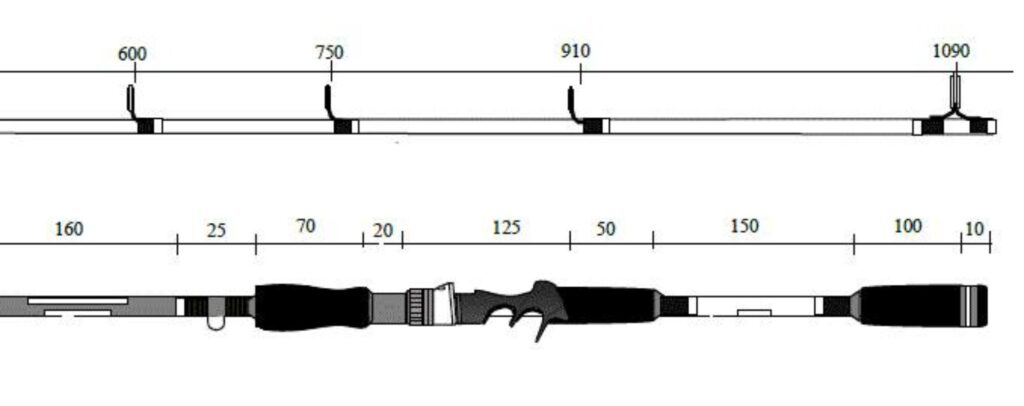
How Proper Grip Transitions Improve Rod Sensitivity (Most Rods Get This Wrong)

If you’ve ever picked up a rod and thought “Why does this feel dead?” — chances are the blank wasn’t the real problem.

One of the biggest killers of rod sensitivity is something almost no factory rod builder talks about:

The grip-to-reel-seat transition.

A rod blank is at its most sensitive when it’s untouched — raw carbon transferring vibration straight into your hand.

The moment you start stacking parts, you risk choking sensitivity and changing the rod’s behaviour.

Most anglers never consider this, but when you look at custom rods vs mass-produced rods, the difference is massive.

Why Transitions Matter More Than You Think

1️⃣ Direct Contact Equals Sensitivity

To feel subtle bites — tail nips, soft inhalations, weight changes — you need uninterrupted contact between:

  • your hand
  • the grip
  • the reel seat
  • the blank

When these join cleanly, vibration travels through everything efficiently.

But when you get:

  • steps
  • gaps
  • poorly fitted grips
  • thick epoxy lumps
  • hard edges
  • loose tolerances

…your hand no longer feels what the blank feels.

The rod still vibrates, but the message never reaches you.

2️⃣ Many Factory Rods Kill Sensitivity Without Realising

Factories build for speed, not precision.

That often means:

  • grips drilled too large
  • filler glue used to “pack out” the gaps
  • EVA or cork that is too thick
  • reel seats that don’t sit flush
  • parts simply stacked on top of each other

Stacking parts is easier — but it also:

  • increases weight
  • reduces feel
  • interrupts blank contact
  • changes the fulcrum point
  • dulls the rod

A rod blank at its very best is bare, with absolutely nothing on it.

Everything added should respect the blank — not suffocate it.

3️⃣ Why Proper Transitions Change Everything

A correctly shaped, correctly fitted grip does three things:

✔ 

Improves sensitivity

Your palm sits on a clean, uninterrupted surface that is bonded directly to the blank.

This is why high-end custom rods “feel alive.”

✔ 

Improves comfort

An ergonomic taper means:

  • no hotspots
  • no sharp edges
  • smooth finger indexing
  • long-session comfort on the kayak or boat

✔ 

Improves control

A proper transition lets you:

  • point the blank naturally
  • maintain consistent hand pressure
  • lift, twitch, and hop softbaits far more precisely

Softbaiting is a method built on feel.

If the transitions are wrong, you lose the method.

4️⃣ Why Good Transitions Cost More (And Why They’re Worth It)

Shaping grips into a perfect taper takes:

  • time
  • tools
  • correct mandrels
  • meticulous fitting
  • experience

It’s slower.

It’s harder.

But the result is a rod that feels dramatically better in your hand — and transmits so much more information.

This is where price differences between custom rods make sense.

You’re not buying “parts” — you’re buying precision.

5️⃣ The K-Labs Approach (No Sales Pitch, Just Method)

Every grip is:

  • fitted to the blank with minimal tolerances
  • shaped to flow into the reel seat
  • aligned so the blank’s feel isn’t interrupted
  • sanded and refined by hand
  • designed for both feel and comfort

It’s not about flashiness — it’s about function you can actually feel.

6️⃣ The Result? You Detect Bites You Never Knew Were There

With clean transitions, you feel:

  • weight changes
  • soft pickups
  • slight ticks on the drop
  • weed vs fish
  • tap-tap-tap from small snapper
  • the “dead stop” inhale bite

Most anglers think they’re experienced — until they use a rod where the blank truly speaks to the hand.

FAQ:

Q1: Why do grip transitions affect rod sensitivity?

Because any gap, step, or filler material interrupts the vibration pathway between the blank and your hand.

Q2: What makes a transition “good”?

A smooth, flush fit where the grip and reel seat meet the blank with no steps, gaps, or excess glue.

Q3: Does EVA vs cork change sensitivity?

Thickness matters more than material — thick grips mute feel, thin grips enhance it.

Q4: Why do factory rods often feel dead?

Because parts are stacked quickly, often with large gaps packed out with glue, killing blank-to-hand contact.

Q5: Do custom transitions cost more?

Yes — because shaping and precision-fitting each piece takes time, but dramatically improves feel.

Why Most Softbait Rods Feel Dead — And How to Fix It (NZ Edition)

K-Labs Custom Built Rods — Rods of Fine Design

Every angler knows the feeling: you cast out a softbait, start working the lure, and something doesn’t feel right. The rod feels numb. You can’t feel the lure. Little bumps don’t register. The connection isn’t there. The rod feels “dead.”

This is one of the most common complaints in softbait fishing — especially in NZ where wind, current and drift speed demand a highly responsive rod. But very few anglers actually understand why a rod feels dead, or what causes that dull, lifeless sensation. This guide breaks down the real reasons, the science behind it, and what separates a lively softbait rod from one that feels blind.

1. Dead Feel Comes From Slow Recovery — Not Softness

Many anglers assume a dead-feeling rod is “too soft.” In reality, softness and deadness are not the same thing. A rod feels dead when it has slow recovery — meaning after each lift, twitch or cast, the blank continues to wobble instead of snapping back instantly.

That wobble sucks energy out of the system and kills sensitivity. A rod with fast recovery feels crisp and alive. A rod with slow recovery feels dull, laggy and lifeless.

2. Heavy Guide Trains Kill Feel Instantly

Guides add weight. Weight slows vibration. And vibration is what you feel.

When a rod has:

• oversized heavy guides

• long, high frames

• too many grams at the tip

• poor reduction layout

…it becomes slow to respond and slow to settle.

This is one of the biggest reasons cheap rods feel dead. The blank might be decent — but the guide train strangles it.

3. Bulky Grips Muffle Every Bite

Most anglers don’t realise how much the grip affects feel. Your hand is the receiver. If the handle deadens vibration, the blank could be incredible and you’d still feel nothing.

Dead feel is often caused by:

• thick EVA that absorbs vibration

• soft material that compresses

• steps, gaps and discontinuities between reel seat and grips

• generic “stacked” parts instead of integrated shaping

When grips are shaped to flow directly into the reel seat with no transitions, sensitivity increases dramatically.

4. Poor Blank Engineering = Lifeless Rod

Blank tonnage doesn’t tell you much. Tonnage affects stiffness, not sensitivity. A well-designed 24T or 30T blank can feel sharper than an average 40T blank.

Dead feel often comes from:

• heavy wall thickness

• inefficient fibre layout

• slow tapers

• excess resin

• low-quality carbon that dampens fine vibration

High tonnage is only good when the engineering behind it is good.

5. Dead Feel Shows Up More in NZ Than Anywhere Else

Our conditions expose bad rods faster than warm-water, calm-weather markets. NZ softbaiting typically involves:

• wind creating extra line belly

• fast drifts

• deeper water

• heavier jigheads

• line tension changing constantly

A rod that feels OK in a shop feels dead on the water in NZ conditions. The rod must be responsive enough to show micro-changes in tension — that’s what lets you feel bait behaviour and subtle takes.

6. Cheap Rods Feel Dead Because They Stack Problems

Lower-end rods usually combine:

• sluggish blanks

• heavy guides

• big soft grips

• sloppy reel seat transitions

• poor recovery

Each issue reduces feel. Together, they kill it.

This is why anglers using high-quality setups consistently detect more bites, miss fewer fish and maintain better lure control. Quality gear isn’t about prestige — it’s about information.

7. How to Fix a Dead-Feeling Rod

If your current rod feels dead, you may not need to replace it immediately. A few changes can help:

• Use lighter braid (less line belly = better feel)

• Shorten leader (long leaders dampen feedback)

• Balance your reel to shift feel into the hand

• Reduce jighead weight on calmer days

But if the blank is slow or the guide train is heavy, the rod will always have a ceiling.

8. How to Choose a Rod That Feels Alive

Ignore the stiffness. Ignore the marketing tonnage. Ignore the “sensitive” stickers. Look for:

• fast recovery, not brute stiffness

• lightweight guides, not bulky frames

• seamless grip-to-seat transitions

• crisp response when you tap the blank

• a rod that doesn’t wobble after a small lift

A lively rod gives you information. A dead rod hides everything.

Conclusion

Most rods feel dead not because they’re soft — but because they’re poorly engineered, poorly built, or slowed down by heavy components. Sensitivity isn’t a luxury in NZ softbaiting — it’s a fish-catching advantage.

A rod that feels alive helps you detect hits earlier, work your bait more precisely, and fish with far more confidence.

K-Labs Custom Built Rods — built for connection, feel and total control.

🔥 

FAQ

Q: Why does my softbait rod feel dead or unresponsive?

A: Dead feel usually comes from slow recovery, heavy guides, bulky grips or poor blank engineering, all of which mute vibration.

Q: Does rod stiffness equal sensitivity?

A: No. Stiff rods can actually feel numb. Sensitivity is the rod’s ability to transmit vibration and settle quickly after movement.

Q: Can cheap softbait rods ever feel sensitive?

A: Some can feel OK, but most use heavy components and slower blanks that naturally limit sensitivity.

Q: How can I improve feel on my current setup?

A: Use lighter braid, shorter leaders and better balance. These can help — but blank and guide weight are the biggest factors.

Softbait Rod Sensitivity Misunderstood — The Real Truth NZ Anglers Need

K-Labs Custom Built Rods — Rods of Fine Design

Most anglers talk about “sensitivity” as if it’s a single feature you can buy off a label. But in softbait fishing, sensitivity is one of the most misunderstood qualities in a rod. Some swear a rod is “super sensitive” because it’s stiff. Others think carbon tonnage alone decides feel. In reality, true sensitivity is the result of multiple factors working together — and most of what anglers believe about sensitivity is either incomplete or just wrong. This guide explains what sensitivity actually is, why some rods feel alive in the hand while others feel dead, and how NZ conditions reveal the truth.

  1. Sensitivity Is Not Stiffness
    Many anglers confuse stiffness with sensitivity. A stiff rod transmits force quickly, but it also kills feel because it doesn’t vibrate freely. True sensitivity is a rod’s ability to transmit vibration and stop vibration quickly (recovery). A rod that is too stiff can feel numb. A rod that is too soft can feel mushy. The sweet spot is a blank that responds instantly and settles instantly — this is where bite detection becomes next-level.
  2. Why Blank Material Isn’t the Whole Story
    Carbon tonnage and modulus affect stiffness-to-weight ratio, but they don’t define sensitivity by themselves. Two rods with the same tonnage can feel completely different depending on:
    • Resin system
    • Fibre orientation
    • Taper design
    • Wall thickness
    A well-designed mid-tonnage blank can feel more responsive than a poorly designed “high tonnage” blank. Sensitivity comes from engineering, not marketing numbers.
  3. Handle Design Is the Silent Killer (or Amplifier)
    Most anglers never consider how much the grip affects sensitivity. The handle is the part of the rod physically touching your hand — so if the handle deadens vibration, the blank could be incredible and you’d never feel it. Soft, bulky grips absorb vibration. Poor reel seat transitions block energy flow. Misaligned grip lengths make rods feel sluggish. When grips are shaped to fit seamlessly into the reel seat — no steps, no gaps, no stacked parts — the blank’s natural feel reaches your hand without being muffled. This is where custom rod building makes a real difference.
  4. Guide Train Matters More Than People Realise
    Guides add weight. Weight slows vibration. The heavier the guide train, the more “muted” the rod becomes. In softbait fishing, where detecting small changes in line tension matters, even a few grams affects feel.
    Low frame height, wide ring inserts, poorly placed reduction guides, and non-progressive spacing can all reduce sensitivity. Quality guides help — but correct layout is what unlocks maximum feel.
  5. Why Some Rods Feel “Laggy”
    You mentioned this perfectly: some rods feel like the tip is always one step behind the lure. This isn’t softness — it’s slow recovery. A rod with slow recovery feels like the blank wobbles after each cast or each lift. That wobble kills sensitivity. Fast recovery = crisp. Slow recovery = laggy + no feel.
  6. The NZ Factor — Our Conditions Expose Bad Design
    NZ softbaiting is done in:
    • Current
    • Wind
    • Deep water
    • Fast drifts
    These conditions demand a rod that can transmit very small signals through line tension changes — not just big hits. Cheap rods feel numb because they lose micro-vibrations. A high-quality blank + integrated grips + tuned guide train makes the rod feel connected directly to your jighead.
  7. What Real Sensitivity Feels Like
    A sensitive rod doesn’t just show bites. It shows:
    • When your bait touches kelp
    • When the jighead rolls sideways
    • When a fish mouths the lure
    • When your braid tension changes by millimetres
    Sensitivity is information — and information catches fish.
  8. How to Choose a Truly Sensitive Rod
    Ignore the label. Ignore the tonnage. Ignore the stiffness hype. Instead look for:
    • Clean grip-to-reel seat transitions (no stacked parts)
    • Correctly spaced, lightweight guides
    • A blank with fast recovery, not excessive stiffness
    • A rod that feels crisp, not harsh
    • A lightweight build that doesn’t deaden vibration
    Sensitivity comes from build quality more than from any single material spec.
    Conclusion
    Sensitivity is not a number you can buy. It is the sum of smart design, tuned balance, clean component integration, and a blank engineered for fast response. When everything works together, the rod feels alive in your hand — and softbait fishing becomes far more effective.
    K-Labs Custom Built Rods — Rods of Fine Design.

FAQ

Q: What makes a softbait rod sensitive?

A: True sensitivity comes from fast recovery, clean energy transfer through the handle, light guide trains and a responsive blank — not stiffness alone.

Q: Are high-tonnage blanks more sensitive?

A: Not necessarily. Tonnage affects stiffness, but sensitivity depends on design, taper, weight and how the rod is built.

Q: Why do some rods feel “laggy” or slow?

A: Slow recovery. The blank continues wobbling after a movement, killing vibration transmission and reducing sensitivity.

Q: Do grips affect rod sensitivity?

A: Yes — massively. Bulky or soft grips absorb vibration. Clean, integrated grips amplify feel by allowing energy to reach your hand.

The Ultimate NZ Softbait Rod Guide (2025 Edition)

Choosing the Right Rod for New Zealand Soft Bait Fishing

Softbait fishing has become one of New Zealand’s most effective, exciting, and rewarding ways to target snapper, kahawai, trevally, and a range of inshore species. The technique relies heavily on the right rod—one designed to work lures naturally, transmit subtle bites, and fight fish efficiently without wearing you out.

This guide breaks down exactly what matters when choosing a softbait rod for NZ waters. Whether you’re new to the method or upgrading your setup, this is the definitive reference for understanding how a softbait rod should perform, what separates a great rod from an average one, and how to avoid common buying mistakes.

1. What a Softbait Rod Must Actually Do

A proper softbait rod must perform three core tasks:

1. Load and cast lightweight lures

Softbaits and jigheads typically weigh 1/8–1/2oz in shallow water and up to 5/8–3/4oz in deeper current. The rod must load efficiently with lighter weights and cast them accurately without forcing power into the blank.

2. Work the lure naturally

The rod needs a responsive tip and quick recovery. This gives the angler the ability to:

  • hop or lift the jighead without dragging
  • impart action cleanly
  • maintain line control in wind or current

A rod that is too stiff, too slow, or too “laggy” makes the lure feel dead.

3. Detect bites and convert hook-sets

Softbait fishing is all about sensitivity and connection. A rod should transmit:

  • nudges
  • small pickups
  • slack-line bites
  • weight changes

The blank must recover quickly from a strike to set the hook cleanly and keep pressure on the fish.

2. The Action: Fast vs. Extra Fast

Softbait rods in NZ overwhelmingly benefit from fast or extra-fast actions.

Fast Action

  • Bends mainly in the top third of the rod
  • Excellent balance of control and versatility
  • Handles a wide range of jighead weights
  • Forgiving enough for novice anglers

Extra-Fast Action

  • Bends primarily in the top 20–25%
  • Maximum sensitivity
  • Instant hook-set response
  • Precision control of lure
  • Preferred by many experienced softbait anglers

A softer or moderate-action rod reduces sensitivity, delays hook-sets, and makes lure work sloppy.

3. Power: Matching the Rod to NZ Conditions

Softbait conditions vary dramatically across New Zealand. The correct rod power depends on:

  • water depth
  • current strength
  • jighead weights used
  • target species
  • angler preference

Light to Medium-Light Power

Best for:

  • shallow work (1–10m)
  • light jigheads (1/8–1/4oz)
  • ultra-finesse presentations

Medium Power

Best for:

  • 10–40m
  • 1/4–5/8oz jigheads
  • windy days
  • general NZ softbaiting
    Most anglers fall into this category. It offers the best balance between finesse and strength.

Medium-Heavy Power

Best for:

  • deeper water
  • heavy current
  • larger jigheads (3/4oz+)
  • targeting bigger snapper, kingfish bycatch, or deep reef edges

Rod power is not about how “strong” a rod is. It’s about how efficiently the blank loads and recovers with the jighead weights you actually use.

4. Sensitivity: The Real Separation Between Rods

Sensitivity is influenced by:

  • blank material
  • taper design
  • wall thickness
  • manufacturing quality
  • guide layout
  • grip and reel-seat construction

A rod does not need extreme tonnage carbon to be sensitive. Many 24T–30T blanks, when built well, offer exceptional bite-feel.

Conversely, some high-tonnage rods can feel dull or “laggy” due to:

  • overly thick walls
  • poor resin systems
  • heavy guide trains
  • bulky grips
  • long, unbalanced handles

True sensitivity comes from design quality—not marketing labels.

5. Guide Layout (Without Brand Bias)

Rather than pushing a specific brand, here are the performance principles that matter:

High-Frame Guides

  • keep line off the blank
  • improve casting efficiency
  • help manage wind and braid loops
  • ideal for braid and spin reels
  • reduce friction during long casts

Low-Profile Guides

  • sit closer to the blank
  • can be excellent for overhead rods
  • can reduce weight in certain builds
  • typically not optimal for spinning softbait setups

Insert Material

High-quality inserts reduce heat, reduce braid wear, and improve overall smoothness. What matters:

  • smooth polished finishes
  • proper ring sizing
  • correct placement
  • lightweight frames that match the rod’s action

Avoid rods where guides appear randomly spaced, oversized, or excessively heavy—they directly affect sensitivity and casting.

6. Handle & Grip Design: A Critical (Often Overlooked) Component

This is one area where custom rods massively outperform mass production.

What a good handle should achieve:

  • seamless integration into the reel seat
  • zero hard edges
  • balanced length for under-arm comfort
  • ergonomic rear grip
  • clean transitions that don’t rub or fatigue the hand
  • shaped EVA or cork rather than generic tube grips

Cheap rods often have:

  • pre-shaped generic grips
  • gaps or flooding points
  • misaligned seats
  • grips simply “stacked” on the blank to save labour

A premium rod builder shapes, fits, and sands grips to match:

  • the blank taper
  • the reel seat
  • the balance point
  • the fishing style

This dramatically improves feel, comfort, and performance.

7. Reel Seat: Comfort, Control, and Connection

The reel seat is your connection point to the rod blank.

A good softbait reel seat should:

  • transmit vibration clearly
  • fit the reel foot properly
  • offer secure locking
  • allow direct blank contact or semi-exposed contact
  • avoid bulky plastic components

A poorly fitted seat can kill sensitivity, loosen under load, or create uncomfortable pressure points.

8. Rod Balance: One of the Most Important Factors

A well-balanced softbait rod:

  • feels weightless during use
  • reduces wrist fatigue
  • improves casting accuracy
  • enhances lure control
  • increases hookup conversion

Even a lightweight rod feels heavy and unresponsive if poorly balanced.

Custom builders can tune this precisely.

Factory rods often cannot.

9. Common Softbait Rod Buying Mistakes

Avoid these pitfalls:

Relying on label jargon

Most of it is meaningless.

Feel, balance, action, and build quality matter far more.

Buying a rod that’s too stiff

A stiff rod:

  • kills lure action
  • reduces sensitivity
  • makes hook-sets less efficient
  • feels tiring after a few hours

Buying a rod based on brand alone

Many anglers can’t name the guide type, reel seat, or action of their own rod.

Know what you’re paying for.

Choosing the wrong power for local conditions

NZ is windy, tidal, and variable.

Pick rod power for your actual jighead weight range.

Ignoring handle ergonomics

Comfort, fit, and transitions make or break the softbait experience.

10. How to Choose the Right Softbait Rod for YOU

If you want the simplest approach:

Shallow water (1–10m)

Light–medium-light power

Fast action

1/8–1/4oz jigheads

General NZ use (10–40m)

Medium power

Fast or extra fast

1/4–5/8oz jigheads

Deep current / heavier presentations

Medium-heavy power

Fast

5/8–3/4oz jigheads+

Beyond this, the ideal rod comes down to:

  • how you fish
  • what you fish
  • your casting style
  • preferred reel size
  • desired balance point
  • comfort and grip preferences

A custom builder can tailor these details precisely.

Conclusion

A great softbait rod doesn’t need extreme materials or trendy marketing claims. What matters is how well the rod loads, recovers, balances, and connects you to the lure and the fish.

If you understand rod action, power, balance, guide design, handle ergonomics, and blank performance, you will choose a rod that transforms your softbait fishing.

This guide exists to help NZ anglers make informed decisions—so your gear works with you, not against you.

Q: What action is best for a softbait rod in NZ?

A: Fast and extra-fast actions are ideal because they improve sensitivity, lure control, and hook-set efficiency in NZ drift fishing conditions.

Q: What power rating suits most NZ softbait fishing?

A: Medium power covers the widest range of NZ depth and current conditions, handling 1/4–5/8oz jigheads effectively.

Q: Do high-modulus carbon rods make softbaiting better?

A: Not always. Sensitivity comes from blank design, balance, guide layout, and overall build quality—not just carbon tonnage.

Q: Why is rod balance so important?

A: Proper balance reduces fatigue, improves casting accuracy, and enhances lure feel, especially when softbaiting for long sessions.

Q: Are custom softbait rods worth it?

A: Yes. Custom rods offer superior balance, handle transitions, and sensitivity compared to mass-produced rods, improving overall performance.

THE SCIENCE OF THE SOFTBAIT DROP — WHY SNAPPER HIT BEFORE YOU EVEN WIND (NZ EDITION)

Most anglers think softbaiting success comes from how you work the lure.

Lift… drop… twitch… repeat.

But here’s the truth:

In New Zealand, the majority of snapper are hooked before you ever start winding.

They eat the softbait on the drop — that crucial moment when your lure is sinking naturally through the water column. If your drop is wrong, your entire technique collapses, no matter how good your rod, reel, or softbait is.

This is the part almost nobody understands — so let’s break down the science behind it.

1. Snapper Are Mid-Column Feeders (Not Just Bottom Feeders)

NZ snapper regularly rise into the water column to intercept baitfish, krill, or wounded prey. On a drift, your softbait behaves exactly like:

  • a fleeing baitfish
  • a dying pilchard
  • a stunned anchovy

Snapper see it falling, not being worked.

So the natural drop is the most important moment of the entire presentation.

2. Hydrodynamics: How a Softbait Falls (The Secret No One Talks About)

Every softbait falls differently depending on:

  • jighead weight
  • jighead shape
  • softbait body shape
  • rigging accuracy
  • braid angle
  • drift speed

These factors create three main drop behaviours:

• Flutter

A jerkshad flickers side to side as it sinks.

Deadly in deeper water and fast drifts.

• Glide

A slim bait slices and pauses as it falls.

Triggers big snapper that follow.

• Cruise/Spiral

 (bad)

Occurs when the bait is crooked or mismatched to the jighead shape.

Snapper ignore it every time.

The goal is the first two — the natural wounded prey effect.

3. Why Weight Selection Controls the Entire Drop

Weight determines how long the lure stays in the strike zone.

  • Too heavy → straight down, zero action, zero bites.
  • Too light → never gets into the zone.

NZ starting point:

  • Shallow (2–8m): 1/8–1/4oz
  • Middle (8–20m): 1/4–3/8oz
  • Deep (20–40m): 1/2–5/8oz
  • Fast drift: 3/4oz+

The correct weight gives that perfect hover–flutter–fall cycle snapper can’t resist.

4. Jighead Shape Completely Changes the Sink Behaviour

This is the detail almost everyone misses.

Slim tapered heads

— ideal for jerkshads

— clean glide and flutter

— great in current

Wide hugging heads

— ideal for grubs and minnows

— controlled, stable fall

— more tail action

Shape creates the trajectory.

Weight only controls speed.

Get both wrong → dead drop.

Get both right → explosive fishing.

5. Rig Straight — Or Don’t Bother Fishing

A crooked bait:

  • spins
  • rolls
  • spirals
  • looks totally unnatural

Snapper won’t touch it.

Rigging perfectly straight creates a smooth, natural descent that draws fish from metres away.

6. The Braid Angle: The Invisible Force That Changes Everything

Most anglers don’t realise that your braid angle controls the drop.

• Steep angle (straight down):

Heavier fall, less action.

• Angled drift presentation:

The bait “swims” as it descends — EXACTLY what snapper want.

This is why casting ahead of the drift is so deadly.

7. How Snapper Actually Hit Softbaits on the Drop

Here’s what really happens:

  1. Snapper sees the flutter.
  2. Follows the bait downward.
  3. Waits for the pause in the fall.
  4. Inhales it without you feeling anything.
  5. You lift the rod… and it loads up.

If you’re not catching on the drop, your sink profile is wrong.

8. The Deadly NZ Drop Technique (K-Labs Method)

Use this sequence:

  1. Cast 30–45° ahead of the drift.
  2. Keep light tension on the line — NOT tight, not slack.
  3. Watch the braid like a hawk.
  4. Hit ANY twitch, tick, or stoppage.
  5. Work the bait once or twice.
  6. Repeat.

Mastering the drop is more important than any rod, reel, lure, or colour.

This is where big fish eat.

SUMMARY

New Zealand softbait fishing is won or lost during the drop.

Perfect your:

  • weight
  • head shape
  • rigging
  • braid angle
  • drift alignment

And your catch rate goes insane.

The drop is the technique. Everything else is secondary.

FAQ

Q: Why do snapper hit softbaits on the drop?

A: Because the softbait falls like wounded prey. Most strikes happen during the natural flutter or glide as the lure sinks.

Q: What jighead weight works best for the drop?

A: Use the lightest weight that still reaches bottom. This gives more flutter, more hang time, and more bites in NZ conditions.

Q: Why does jighead shape matter?

A: Slim tapered heads create glide for jerkshads, while wider hugging heads stabilise grubs and minnows. Shape controls sink behaviour.

Q: How do I know if my softbait is rigged right?

A: If it tracks straight and doesn’t spin on the drop, it’s rigged well. Any roll or spiral kills the presentation.

Q: Why is braid angle important?

A: A forward drift angle gives your softbait a natural swimming descent, which dramatically increases strike rates.